
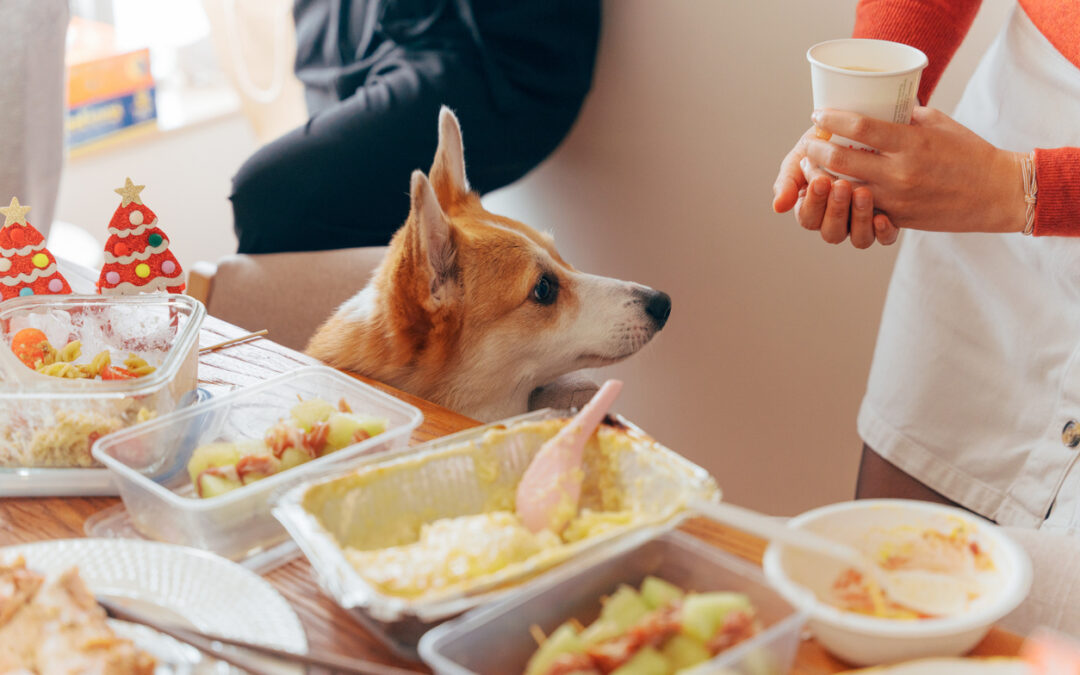
What are the Thanksgiving foods dogs can’t eat? Skip turkey skin, gravy, drippings, cooked bones, stuffing with onions or garlic, raw bread dough, grapes and raisins, chocolate, alcohol, and anything with xylitol. Plain turkey meat without skin or plain green beans are safer ways to include your pet. Lake Tapps Veterinary Hospital, one of the trusted vets in Bonney Lake, WA, explains where each food goes wrong.
Picture a Thanksgiving dinner from the moment the first dish leaves the oven until the last scraps hit the trash can. At every stop along the way, there is something that smells irresistible to a dog or cat.
Let’s follow the plate, one stop at a time, to see where the trouble usually starts.
Stop One: Is Raw Bread Dough Dangerous for Dogs?
Yes. Raw bread, roll, or pizza dough is dangerous for dogs because it expands in a warm stomach and ferments, producing alcohol and gas. If your dog ate bread dough, treat it as a true emergency, not just a stomachache.
Put dough somewhere your dog cannot reach, such as a closed oven or high cabinet. Sticks of butter left out to soften are another counter-surfing favorite, and high fat is hard on a pet’s system.
Stop Two: Can Dogs Eat Turkey, Skin, and Bones?
Can dogs eat turkey? Yes, in small amounts of plain, cooked, skinless meat. Skin, drippings, and gravy are rich in fat, and even a small amount can trigger pancreatitis in some pets. Cooked bones can also splinter, causing choking or tears.
Cats can get pancreatitis from fatty scraps too, so keep skin and gravy away from them as well.
Stop Three: Which Side Dishes and Desserts Are Toxic to Pets?
Holiday foods toxic to pets show up all over the table, starting with stuffing, which often hides onions, garlic, and heavy seasoning that can harm red blood cells. Desserts bring their own issues:
- Chocolate, especially dark or baking chocolate, is toxic to pets.
- Grapes, raisins, and currants can cause kidney failure in dogs.
- Xylitol, a sweetener in some sugar-free items, can cause a rapid drop in blood sugar and liver injury.
- Alcohol and coffee are dangerous, even in small amounts.
Guests mean well, but they rarely know your pet’s rules. Keep a small jar of approved treats for anyone who wants to share.
Stop Four: What Happens If a Pet Eats Bones, Corn Cobs, or String?
Corn cobs, turkey bones, string, and foil can cause an intestinal blockage, which needs prompt veterinary care. After dinner, the trash is a goldmine, and signs of a blockage include repeated vomiting, trouble keeping water down, belly pain, and lethargy. Use a trash can with a locking lid, or take food waste out right away.
What Are the Symptoms of Pancreatitis in Dogs After a Fatty Meal?
Pancreatitis in dogs symptoms usually appear within a day or two of a fatty meal: repeated vomiting, loss of appetite, a hunched posture, belly pain, lethargy, and diarrhea. The pancreas helps digest fat, and a sudden rich meal can inflame it. Any dog can be affected, though miniature schnauzers and Yorkshire terriers are more prone, and cats can develop it too.
Treatment usually involves fluids, pain control, and anti-nausea medication, and some pets need to be hospitalized. If you see these signs, call promptly.
How Can You Include Your Pet in Holiday Meals Safely?
Include your pet with a small pet plate instead of table scraps. Set aside a spoonful of plain, skinless turkey and a few plain green beans or a spoonful of plain canned pumpkin, not pie filling. Cats can share a tiny bite of plain turkey too, but never offer onion, garlic, or chives, which are especially toxic to cats. Keep treats to about 10 percent of daily calories. If your pet has diabetes, kidney disease, food allergies, or a history of pancreatitis, skip extras and ask us for guidance.
What Should You Do If Your Pet Eats Something Dangerous Over the Holiday Weekend?
If your pet eats something dangerous, call us right away. Holiday meals often land when many offices are closed, so a little planning before the holiday makes the weekend easier.
Before the holiday, save the number for our Bonney Lake vet services, 253-863-9818, in your phone, and call us if you are worried about something your pet ate.
Note what your pet ate, how much, and when, and keep the packaging. The sooner we know, the more options we have. Please do not induce vomiting unless a veterinarian tells you to.
When Should You Schedule Pet Wellness Exams After the Holidays?
When things settle down, schedule pet wellness exams to check weight and overall health. If you have noticed bad breath, drooling, or trouble chewing, pet dental care with a dental exam is a good idea too.
Make Thanksgiving Pet Safety Simple With Lake Tapps Veterinary Hospital
A great holiday meal should end with full bellies and happy pets, not a worried weekend. Lake Tapps Veterinary Hospital has provided veterinary services in Bonney Lake, WA and around Lake Tapps since 1990, from our hospital in the foothills of Mt. Rainier. Call 253-863-9818 or book your pet’s pre-holiday visit at Lake Tapps Veterinary Hospital.
Sources: AVMA household hazards guide and AVMA holiday safety tips.